
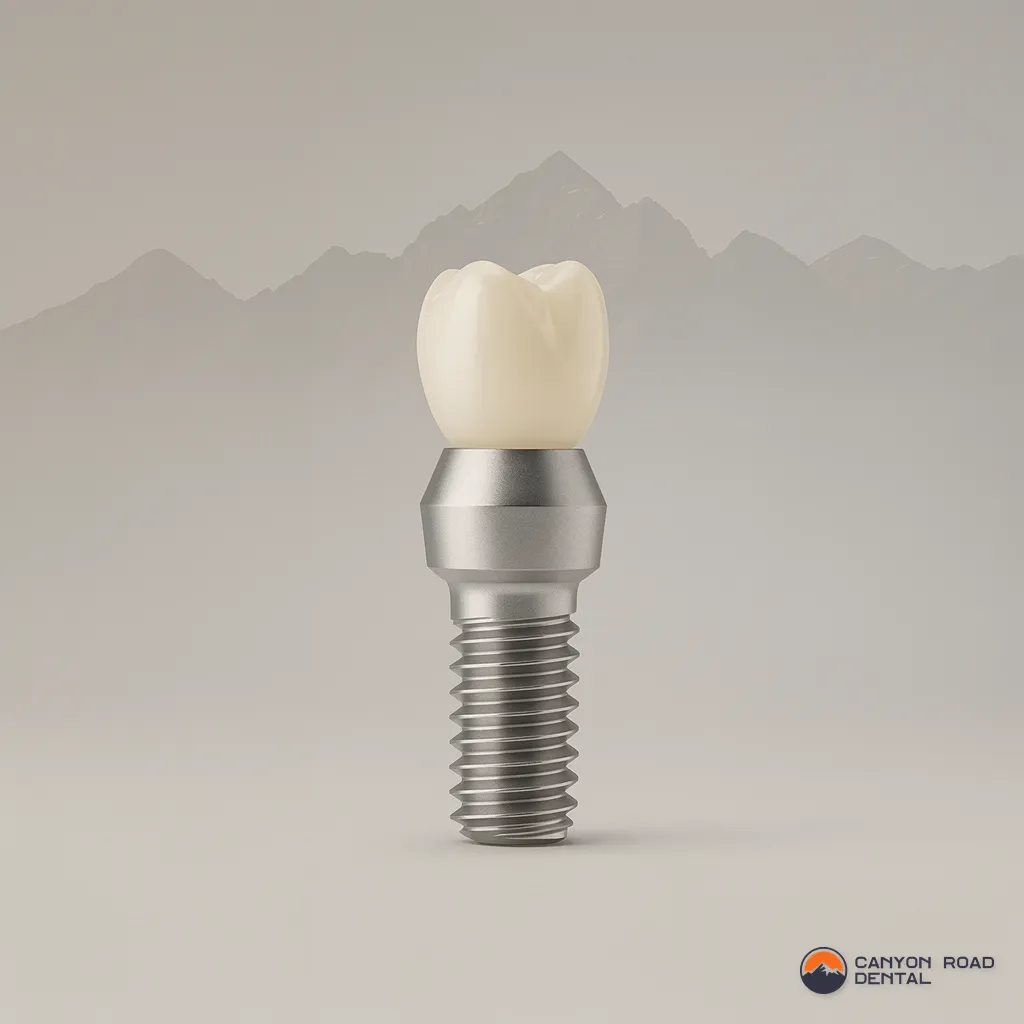
Dental implant costs typically range from $3,000 to $6,000 per single tooth, covering the implant post, abutment, and crown. Full mouth restorations run $14,000 to $90,000 depending on the number of implants needed. Bone grafting, if required beforehand, adds to your total. Canyon Road Dental offers flexible payment options to help you budget for treatment.
Key Takeaways
Single tooth implants cost around $3,000, with pricing varying based on specific needs including post, abutment, and crown.
Full mouth implants range from $14,000 to $90,000 depending on complexity and materials.
Canyon Road Dental in Provo provides comprehensive implant consultations to discuss your specific needs.
Implant costs vary based on bone quality, tooth location, and additional procedures required beforehand.
How Much Do Dental Implants Cost in Provo?
Provo patients researching dental implants cost typically see a wide range of prices tied to the number of teeth, the materials used, and whether extra procedures are needed. Canyon Road Dental, based in Provo, Utah, walks local patients through realistic pricing before any treatment begins, so surprises don’t derail your budget. Understanding national benchmarks first gives you a useful starting point for evaluating any quote you receive.
Nationally, a single replacement tooth — including the implant post, the abutment, and the crown — generally falls in the low-to-mid thousands of dollars. Full-mouth restorations cost considerably more, since they involve multiple implants and often more complex planning.
Does dental insurance change the price?
Coverage varies significantly by plan, and many benefit plans limit or exclude implant procedures. Without dental benefits, a single implant tooth commonly runs around $2,800, with costs varying based on specific cases and additional work required.
What drives the final number for a Provo patient?
Bone density, the number of teeth being replaced, and prosthetic material all shift the total. A patient needing a bone graft or dental implants in Provo will land at the higher end of these ranges. As the primary brand identifier used consistently across all pages, Canyon Road Dental establishes local presence and service area coverage that lets Provo and Utah County residents get pricing guidance grounded in their actual mouth, not a national average.
Does Bone Grafting Add to Implant Costs?
Yes, bone grafting typically adds an extra procedure and fee to your dental implants cost. Skipping it when you need it risks implant failure down the road. Bone loss from an extraction, gum disease, or an injury often means your jaw needs rebuilding before an implant can move forward at all. Without enough bone volume, there’s simply nothing stable for the implant to grip.
A bone graft restores that missing structure. The procedure rebuilds volume and creates the support your natural teeth once relied on. Support your future crown or restoration will need too. Think of it as laying a foundation before construction begins. Skip that step, and the whole project sits on shaky ground.
Why does bone grafting come before implant placement?
Implants require a stable base that fuses directly with your jawbone. When natural bone volume runs low, grafting strengthens the area first. The implant can integrate properly and function like a real tooth. For many patients across Provo, this graft-first approach is the standard starting point toward lasting tooth replacement.
Do all implant patients in Utah County need a bone graft?
Not necessarily — bone loss varies from person to person, and your jaw structure determines whether grafting is required. Here’s what typically factors into that decision:
How much bone remains at the implant site after tooth loss
Why the tooth was lost — extraction, gum disease, or trauma each affect bone differently
How long the site has healed since the tooth was removed
Whether adjacent teeth or sinus structures limit available bone
For Provo and Utah County residents planning implant treatment, a personalized evaluation determines whether grafting fits into your timeline. Skipping this assessment doesn’t lower your total cost. It just delays the real conversation until later, often after a failed attempt.
What Factors Change Your Implant Price?
Three main variables drive your final number: the type of implant you need, how many teeth you’re replacing, and whether your dentist participates in your insurance network. Skip these details before budgeting, and you risk a quote that shocks you at checkout. Understanding dental implants cost factors up front puts you back in control of the conversation with your dental team.
Your treatment plan starts with the implant type. A single missing tooth calls for a different solution than a full arch replacement. Each option carries its own materials, lab work, and appointment structure. The number of implants you need multiplies these costs, so replacing several teeth naturally runs higher than replacing one.
Insurance coverage plays an equally large role. Some plans partially cover implant procedures, others don’t, and whether your provider is in-network changes what you pay out of pocket. Two patients with identical treatment plans can walk away with very different bills based on coverage alone.
Does Healing Time Affect the Cost of Your Implants?
Yes — recovery length can shift your overall treatment timeline and, by extension, your total cost. Healing varies from person to person, and knowing what to expect at each phase helps you plan financially, not just physically. If your case requires bone grafting or extended healing before implant placement, that adds appointments to your schedule.
Why Does Knowing the Timeline Matter for Your Budget?
Preparing for each stage in advance keeps you from being blindsided by extra visits or delayed procedures. Patients who understand the healing timeline before starting treatment report feeling more confident navigating the process. That confidence extends to budgeting, since you can anticipate additional costs tied to a longer recovery rather than discovering them mid-treatment.
Ask your provider to walk through these factors before you commit to a plan.
Will Insurance or Financing Lower Your Cost?
Insurance and financing can meaningfully reduce what you pay out of pocket, but neither erases the price tag entirely. Your final number still depends on your specific case. Dental implants cost varies by individual circumstances, not a single fixed nationwide rate. Two patients in Provo can walk away with very different bills for similar-looking procedures.
Single-tooth cases typically sit at the lower end of the spectrum. Full-mouth restorations tell a different story. Depending on how many implants you need, the materials chosen, and whether bone grafting is required first, full-mouth cases can range from roughly $14,000 to as much as $90,000 or more.
Does waiting to get implants save money?
Waiting rarely saves you money, and it often costs more in the long run. Missing teeth allow bone loss to progress in the jaw, making the surrounding structure harder to maintain over time. Once that happens, you may need bone grafting before implants can even be placed, adding an extra procedure — and an extra expense — to your treatment plan.
What financing options exist for implants?
Financing structures vary by provider and by your insurance plan’s specific coverage terms. Common approaches include:
Dental insurance that partially covers implant-related procedures, depending on your plan
In-house or third-party payment plans that spread costs over several months
Staged treatment, where grafting and implant placement are billed separately over time
Before committing to a plan, ask for a written breakdown of every fee involved. A clear estimate today protects you from costly surprises — and from the compounding expense of delayed treatment — down the road.
How Should You Plan Your Implant Budget?
Planning starts with a personalized estimate, not a national average pulled from the internet. Dental implants cost figures vary widely by case, so a real number for your situation comes from an actual exam. Canyon Road Dental is located in Provo, UT, giving Utah County patients a local consultation rather than a guess based on averages from another state’s market.
Budgeting also means accounting for time, not just dollars. Treatment often unfolds in phases, and grafting adds its own healing window before the implant post can be placed. Mapping out that timeline in advance helps you set aside funds for each stage instead of being caught off guard mid-treatment.
How can you estimate implant costs before your first appointment?
Online cost estimator tools give you a starting price range for dental services in your area before you ever book a visit. Think of this as a rough planning number, useful for comparing options and setting expectations early.
A practical budget checklist looks like this:
Schedule a local consultation for a personalized quote
Ask aa the full healing and grafting timeline
Use an online estimator for a preliminary range
Confirm which phases carry separate costs
Combining these steps gives you a clearer, more realistic financial picture.
FAQ
How much does a single tooth implant cost?
A single tooth implant costs between $3,000 and pricing varies covering the implant post, abutment, and crown.
How much does full mouth implant restoration cost?
Full mouth restoration ranges from $14,000 to $90,000 or more, depending on the number of implants and materials needed.
Does bone grafting increase the total implant cost?
Yes, bone grafting adds an extra procedure and fee to rebuild jaw volume, ensuring the implant has stable support before placement.
Conclusion
In closing, dental implant costs represent a significant investment in your long-term oral health and quality of life. While pricing varies based on your individual needs. Treatment complexity, Canyon Road Dental remains committed to making comprehensive implant solutions accessible through flexible payment options and transparent pricing discussions. We encourage you to schedule a consultation with our experienced team to explore your options. Discover a treatment plan that aligns with both your clinical goals and financial considerations.