
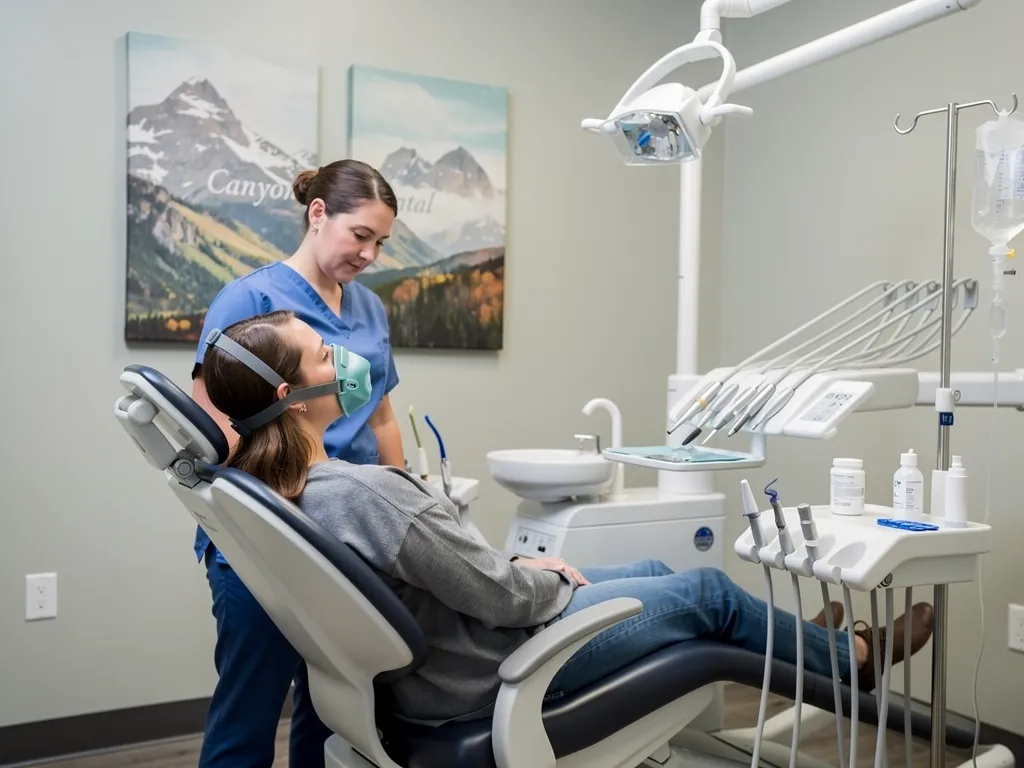
When it comes to types of sedation dentistry, four main sedation options exist: nitrous oxide (laughing gas), oral conscious sedation, IV sedation, and general anesthesia. Dental anxiety affects many people, and your dentist matches the method to your procedure and comfort needs—nitrous wears off quickly. IV sedation suits longer, complex treatments like periodontal surgery.
Key Takeaways
Nitrous oxide sedation provides mild relaxation while keeping you awake and responsive during procedures.
Oral sedation uses prescribed medications to reduce anxiety for patients with moderate dental fear.
IV sedation delivers medication directly into your bloodstream for deeper relaxation during complex procedures.
Sedation dentistry at Canyon Road Dental effectively addresses dental anxiety for many patients.
What Is Sedation Dentistry?
Medications designed to calm your nerves and ease tension define sedation dentistry. During treatment, you stay comfortable while a dentist works, rather than gripping the armrest through every step. For patients who dread the drill or freeze up at the thought of a needle, this approach changes what a dental visit feels like.
Anxiety keeps countless people away from the dental chair for years. Skipping care doesn’t make dental problems disappear — it lets them grow into bigger, costlier issues. Sedation options exist precisely to break that cycle, giving you a way to get treatment done without the dread.
Does Sedation Mean You’ll Be Unconscious?
Not necessarily. Many types of sedation dentistry keep you awake and responsive, just deeply relaxed. You can still answer questions or follow simple instructions, but discomfort and stress fade into the background. Deeper levels exist too, reserved for longer or more complex procedures.
Who Benefits Most From Sedation Dentistry?
Sedation helps patients who avoid the dentist out of fear, have sensitive teeth or gag reflexes, or need extensive work completed in one sitting. If needles, drills, or clinical smells trigger anxiety for you, sedation removes much of that burden.
Canyon Road Dental delivers full-service family dentistry in Provo, giving anxious patients a comfortable starting point for exploring these options. You don’t have to navigate sedation choices alone or guess which approach fits your needs. Based in Provo, UT, Canyon Road Dental makes this kind of supportive, judgment-free care accessible to families and individuals throughout the surrounding area. A conversation with your dentist about your specific fears. Treatment plan is the first step toward a visit that feels manageable instead of dreaded.
How Many Types of Sedation Dentistry Exist?
Four levels of sedation address the range of anxiety patients bring into a dental chair. Comfort needs differ from person to person, so no single approach works for everyone. Dental anxiety is a common concern reported across the population. A reality that explains why dental teams offer more than one type of sedation dentistry rather than a one-size-fits-all option.
Canyon Road Dental builds sedation choices directly into the visit experience. Sedation options sit alongside online booking and on-time scheduling, reducing the dread that often comes with waiting-room delays. Treatment planning also draws on modern technology such as 3D cone beam imaging. Digital impressions, giving the dental team a precise picture before any sedation decision gets made.
What determines which sedation level is right for you?
Procedure length, anxiety severity, and personal pain sensitivity all factor into the decision. A routine cleaning rarely calls for the same approach as a lengthy restorative procedure. Your dental team reviews your medical history and comfort concerns before recommending a path forward.
Sedation options generally fall into these categories:
Minimal sedation — you stay fully awake and alert, with mild relaxation
Moderate sedation — often called conscious sedation, where you respond to prompts but feel little discomfort
Deep sedation — you drift near the edge of consciousness but remain arousable
General anesthesia — you lose consciousness completely for extensive procedures
Matching the right level to your specific procedure keeps stress low. Outcomes predictable, especially when precise imaging already informs the plan before you sit down.
Which Type Fits Mild Anxiety Or Sensitivity?
Nitrous oxide, often called laughing gas, suits patients with mild anxiety or heightened sensitivity best. This lighter option calms nerves without knocking you out. You stay alert and can respond to your dentist throughout the appointment. Among the types of sedation dentistry available, this level works well for anyone who feels nervous. Doesn’t need deep sedation for a lengthy procedure.
Your dentist may suggest this route if you have a sensitive gag reflex, sensitive teeth, or a fear of needles that makes numbing shots stressful. Many patients avoid checkups for years because of needle anxiety alone. Mild sedation removes that barrier and makes routine care manageable again.
What If I’m Only Nervous About Certain Procedures?
Some patients only feel anxious during specific treatments, like cleanings that trigger a gag reflex or fillings that require numbing injections. Lighter sedation addresses these specific triggers without the recovery time associated with heavier sedation. You typically resume normal activities right after your appointment.
Canyon Road Dental pairs comfort-focused technology with sedation choices to keep lighter procedures relaxed and efficient. Same-day crown technology and laser dentistry reduce chair time, and adding mild sedation on top means less time spent worrying and more time spent healing.
Where Can I Ask About Lighter Sedation Options?
Canyon Road Dental’s Provo location gives anxious patients a nearby place to discuss which sedation level fits their needs.
Consider these signs mild sedation may be right for you:
You feel nervous but don’t dread the visit entirely
Needles for numbing shots make you tense up
Your gag reflex complicates cleanings or impressions
Sensitive teeth make routine work uncomfortable
Talk with your dental team before your visit so they can match the sedation level to your specific concerns.
What About Deeper Sedation Or General Anesthesia?
Deeper sedation exists for procedures that demand more than a calming edge. Dentists reserve types of sedation dentistry ranging from mild nitrous oxide to full general anesthesia based on how complex or lengthy your treatment will be. The heavier the procedure, the deeper the sedation option your dentist may recommend.
Not every patient needs the same level of relaxation. A short filling calls for something light; a multi-hour restorative plan or oral surgery often calls for something far stronger. Here’s how the spectrum generally breaks down:
You stay in capable hands throughout the process. Canyon Road Dental’s full-service family dentistry in Provo gives patients access to the support longer, more involved procedures require. You’re never navigating an extensive treatment plan alone. Sedation options are built into a broader approach that emphasizes efficient, on-time visits, meaning your comfort and your schedule both stay protected.
Is general anesthesia safe for dental procedures?
General anesthesia is reserved for cases where deep unconsciousness genuinely benefits the patient, such as extensive surgical work or severe anxiety that makes lighter sedation ineffective. Your dental team monitors you closely throughout the procedure. Discussing your health history beforehand helps determine whether this level of sedation fits your situation.
How do I know which sedation level is right for me?
The right level depends on your anxiety, pain sensitivity, and the scope of your treatment. A consultation lets your dentist match the sedation approach to your specific procedure, keeping both comfort and safety in balance.
How Do You Choose The Right Sedation Option?
Choosing the right approach starts with an honest look at your anxiety level, the complexity of the procedure, and your medical history. A short cleaning calls for a different plan than a multi-hour restorative visit. Matching the sedation method to the treatment—and to your comfort threshold—makes the difference between dreading an appointment and actually keeping it.
For many patients, avoidance is the real risk. Sedation dentistry exists precisely because apprehension keeps people from seeking care they genuinely need, letting small problems turn into painful, expensive ones. Talking openly with your dental team about your fears, past experiences, and pain tolerance gives them what they need to recommend the right level of sedation for you.
What Should You Ask Before Choosing a Sedation Method?
Ask how long the sedative takes to wear off, whether you’ll need someone to drive you home, and what monitoring happens during the procedure. Ask, too, how the sedation interacts with any medications or health conditions you already manage. These questions help set realistic expectations and reduce surprises on treatment day.
Where Can You Get Personalized Guidance in Provo?
Patients throughout Provo can sit down with the team at Canyon Road Dental to review which sedation option fits their needs, their procedure, and their comfort level. Canyon Road Dental is the trusted name serving Provo, Utah families and their neighboring communities. The practice pairs sedation choices with modern technology—3D cone beam imaging, digital impressions, and CEREC restorations—so treatment moves forward efficiently once you’re relaxed and ready. That combination of comfort-focused care and advanced tools helps you get necessary work done without the dread that keeps so many people away from the chair.
FAQ
Will sedation dentistry make you unconscious during treatment?
Not necessarily. Nitrous oxide and oral sedation keep you awake and responsive while easing discomfort and stress. Deeper options like IV sedation or general anesthesia exist for longer, more complex procedures.
Who benefits most from sedation dentistry?
Patients who avoid the dentist out of fear, have sensitive teeth or gag reflexes, or need extensive work completed in one sitting benefit most. Sedation removes much of the burden triggered by needles, drills, or clinical smells.
How does Canyon Road Dental determine which sedation type fits your needs?
Canyon Road Dental matches sedation method to procedure length. Comfort needs, using tools like 3D cone beam imaging and digital impressions for precise treatment planning. A conversation about your specific fears guides the final decision.
Conclusion
In closing, understanding your sedation dentistry options empowers you to choose the approach that best suits your comfort level and dental needs. Whether you prefer minimal sedation for mild anxiety or deeper sedation for complex procedures, these techniques transform dental visits from stressful experiences into calm, manageable appointments. By discussing your concerns and medical history with your dentist, you’ll develop a personalized sedation plan that prioritizes your well-being while ensuring quality care. Taking this proactive step toward comfortable dentistry helps you maintain optimal oral health without fear or hesitation.